I know an old fashioned clothes merchant who constructed a company in a spare room. During the first year, she attended estate sales and thrift stores, and took pictures of the items that she found on a white background and sold them on Instagram DMs (direct messages). Manual, disorganized, not scalable. Then she made an app (but not fancy), a store with some good photos, size filters, a sold out inventory wait list and push notifications when they had new stock. After 8 months she was making 3 times as much and was having 2 people working with her to get materials.
It’s not the product that changed. The finding and purchasing experience didn’t change, it is the feeling of being found and purchased that changed.
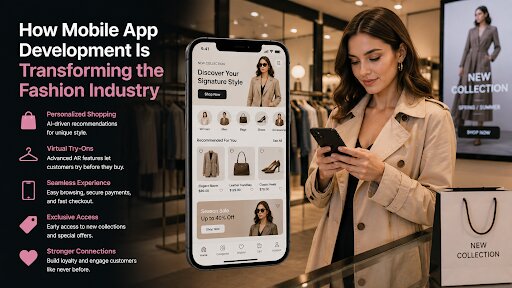
This is not a special trick that she has; it’s a trick that many boutique sellers of the mobile infrastructure have. It’s happening at all scales of fashion, from smaller boutiques to longtime brands that have been in business for 100 years or more that are realizing that the mobile customer is the next generation and where they live and shop. There’s so much to understand about how mobile is driving change in the fashion world, and not just in terms of sales, but also in the discovery, fitment, returns and brand-to-customer relationship. A competent Mobile Application Development Service provider understands that any fashion app should meet the specific requirements of the fashion industry and where there are certain aspects of the visual experience, inventory complexity and size personalization, it should be unique.
Visual Commerce at the Standard Fashion Customers Now Expect
Fashion is a look thing, and the mobile apps that have established the visual benchmark in the category have left viewers with higher expectations that every fashion brand must meet – with or without investing in the technology to do so.
The shift from still product images to video-first presentations to try-on has taken a much quicker turn than most legacy brands expected. Who ever has tried out shoppable video on TikTok Shop, or has seen influencers style a garment in a way that conveys how it moves and drapes before buying, has these expectations for all fashion shopping experiences—including those of brands that haven’t invested in them.
A presentation of high-quality product is no longer a luxury with a tiered feature. It’s the min expectation. But to live up to that expectation means taking certain technical decisions, like the image delivery adaptive compression, which automatically delivers the right size of images for the right device and connection speed; progressive loading, which provides the user with something to look at while the full resolution images are loading; and the ability to zoom, which maintains a high frame rate when a customer looks at a fabric texture or stitch detail up close. This isn’t something that will be accomplished by simply using standard retail components; it will take deliberate engineering investments to get it right.
Size and Fit: The Problem Mobile Is Finally Solving
Returns are the economics problem that has haunted fashion e-commerce since its earliest days. Fit uncertainty drives return rates that run thirty to forty percent for apparel online substantially higher than physical retail and the environmental and operational costs of those returns are significant enough that they threaten the profitability of fashion e-commerce at scale.
The core problem is that a size label is a crude proxy for fit. A size twelve dress from one brand fits differently from a size twelve from another. The same garment fits differently on different body proportions even at the same nominal measurements. Customers who’ve been burned by fit uncertainty develop return habits buy multiple sizes, keep what fits, return the rest that are expensive for brands and wasteful in ways the industry is under increasing pressure to address.
Mobile technology is attacking this problem from several directions simultaneously. Body measurement apps that use a phone camera to generate accurate size recommendations have improved to the point where they’re useful rather than embarrassing the early versions required elaborate calibration rituals and produced recommendations of limited accuracy. Current implementations using computer vision and machine learning can generate meaningful size guidance from a few photos taken in standard clothing.
Virtual try-on that overlays a garment on a user’s image either a photo or live camera feed has advanced significantly in realism in the past few years. It doesn’t yet reliably communicate how a garment will drape or move, but it addresses the basic proportion question: does this silhouette work for my body in ways that static product photos on models with different proportions don’t.
Size recommendation engines that learn from a user’s purchase and return history across multiple brands, building an increasingly accurate personal size profile over time, address fit uncertainty through accumulated data rather than point-in-time measurement. A user who’s bought and kept twenty items across three seasons has generated enough signal about their fit preferences that recommendations calibrated to their history are substantially more accurate than generic size guidance.
Discovery and Personalization at Fashion’s Specific Complexity
Fashion inventory is more complex than most retail categories. A single style may exist in dozens of size and color combinations. Trend relevance means that what’s worth surfacing to a customer changes with seasons, occasions, and evolving personal style. The relationship between what a customer has bought before and what they’ll want next isn’t a simple “more of the same” calculation fashion preferences evolve, occasions drive purchasing, and social context shapes what feels right at a given moment.
Personalized discovery in fashion apps that works that surfaces things a customer genuinely wants to consider buying rather than things the algorithm is confident they’ll ignore requires a combination of explicit preference collection, behavioral signal from browse and purchase history, and trend awareness that weights current inventory toward what’s actually available rather than what was popular in past seasons. Building recommendation logic that handles all of these simultaneously is substantially more complex than it sounds, and the fashion apps that have done it well have treated recommendation quality as a core product investment rather than a feature to be addressed with an off-the-shelf recommendation engine.
Styling recommendations not just product recommendations but outfit suggestions that show how items work together require content infrastructure beyond product data. Curated outfit photography, editorial styling guidance, and the ability to surface complete looks rather than individual items serve the customer who doesn’t know what they want but knows the feeling they’re going for. This is where the aesthetic judgment that fashion brands carry as brand value gets encoded into digital experience, and it’s where generic retail app frameworks fail most visibly.
Resale and Sustainability Features Reshaping the Market
The resale market in fashion has grown dramatically enough to force every significant fashion brand to develop a position on it, and that position increasingly involves mobile technology.
Authenticated resale platforms apps that facilitate peer-to-peer sales of secondhand fashion with brand authentication services have created a market category that didn’t exist at meaningful scale a decade ago. The technical infrastructure required for this involves seller verification, item authentication workflows, condition assessment, dynamic pricing that accounts for condition and market demand, and logistics integration that handles the multi-party shipping complexity of peer-to-peer transactions. Building this well is a different technical challenge from building a direct-to-consumer retail app, but the brands that have built it or partnered with platforms that have are reaching customers they wouldn’t otherwise reach while extending the commercial life of products they’ve already sold.
Take-back programs and circular fashion initiatives that allow customers to return worn items for credit facilitating brand-controlled resale or recycling require mobile infrastructure for item registration at purchase, condition documentation at return, and credit management that integrates with the primary shopping experience. The brands doing this have found that mobile-facilitated take-back programs have higher participation rates than in-store return programs because the mobile initiation reduces the friction of starting the process.
The Cost Question for Fashion Brands Evaluating Mobile Investment
The pricing of Mobile App Development Cost in fashion is more diverse than for most other retail categories because the difference between a mobile storefront and a truly competitive fashion app is large. The storefront base, including product catalog, cart and checkout could cost a minimum of $40,000-$80,000 to build. Expect to pay anywhere from $150,000 to $400,000 to build a successful fashion app that offers high-quality visual commerce, size recommendation engine, personalized discovery and the content infrastructure for virtual try-on and resale, and more, and enterprise implementations with virtual try-on and resale infrastructure add to that cost.
The comparison that matters is not against zero, but rather against the build cost of the land. It’s about the cost of build and the cost of return rates that accurate size guidance cuts and the revenue impact of discovery experiences that convert at meaningful rates above generic browse and search.
When return rate reduction is added into the picture, the ROI of these brands that have measured the outcomes, is much shorter than what the initial build cost predicts.
What the Vintage Buyer’s Story Actually Illustrates
She didn’t have to compete with Net-a-Porter or SSENSE. She was competing against a customer that has dozens of vintage sellers in her Instagram feed and had to decide where to spend her time based on the feel of discovery that felt most intentional.
The app had a level of intentionality that Instagram DMs didn’t have. New inventory drops that were like events. A user experience that would convey her sourcing. Waitlist, but with a difference: scarcity replaced by anticipation.
She wasn’t developing technology. She was putting the value of her business into the experience of meeting her and purchasing her. Fashion applications do just that in their truest form – they give a brand a sliver of aesthetic intelligence to a medium where the customer already is for the majority of their time.