For years, many e-commerce fulfillment centers have been using a standard box, putting in the product, filling any remaining space with plastic air pillows or crumpled-up paper, and taping the box closed for shipping. It was quick, easy and superficially effective.
However, the world of logistics is huge, and there is a huge change in the way freight bills are calculated behind the scenes. Shipping carriers aren’t only giving you a price for your packages based on their physical weight. They’re billing you for the space that your packages take up in their delivery trucks, cargo planes and container ships.
When you’re still shipping your inventory in oversized standard-sized boxes, you’re not only paying to ship your actual products! Thousands of dollars are being spent on moving air. Custom packaging is not just about aesthetics or saying the eco-friendly word; it’s about making a direct hit on logistics costs and ultimately saving your profit margins in a hard, effective cost-cutting maneuver.
Dimensional Weight (DIM) Made Easy
To understand how custom box dimensions save money, you first have to understand Dimensional Weight (DIM). For example, carriers such as FedEx, UPS, and DHL use a special mathematical formula to calculate a package’s “theoretical” weight, which is purely based on the volume of the package.
The equation is simple
Dimensional Weight = (Length × Width × Height) ÷ DIM Divisor
The carrier determines the actual weighing of the package as well as the calculated DIM weight. The higher of the two numbers is your billable weight
A high-quality item such as a leather loafer or a hoodie made from organic cotton would be reported at just 2 pounds if it’s in a generic stock shipping container. But, the dimensional volume could be an 8 lb. package as the box is too wide or too tall. For every purchase going out of your warehouse doors, you are charged immediately an additional 6 pounds of utterly made-up weight. This invisible penalty takes an incredibly large bite each year from thousands (and thousands!) of shipments.
Freight Domino Effect: How Custom Sizing Slashes Waste
Switching from readily available standard box sizes to custom box precision engineering creates a huge positive chain reaction throughout your distribution system.
Remove the Excess Cube
With custom packaging, you can remove all the millimeters of unnecessary space. You reduce the length, width and height of your container to precisely fit the shape of your product (with a little tolerance for a snug fit), reducing the total cubic volume. This results in a decrease in volume which immediately drops your DIM weight closer to the actual weight on the scale, which in turn reduces your per unit shipping tier.
2. Radical reduction of Void Fill Materials
If a box fits a product, such as a cupcake, like a glove, there is no need for secondary protective packaging. Don’t have to buy, store, and awkwardly pile up boxes of expensive bubble wrap, polystyrene packing peanuts or plastic air bags. This not only reduces the amount of raw material you are using, but also eliminates the mess of plastic packaging from the unboxing experience for your customers and reduces the weight of the physical package slightly.
3. Maximizing Pallet Density and Container Yield
The advantages of being right sized escalate at a startling rate with bulk freight. If your custom box sizes are mathematically calculated to fit 100% on a standard shipping pallet, with no overlap and no open spaces, you can fit more boxes on each tier and more tiers on each pallet.
This higher level of pallet density makes it possible to load a lot more inventory into one sea container or Less-Than-Truckload (LTL) trailer at once, and immediately spread your base inbound and outbound freight costs out over a much greater volume of product.
Standard Oversized Boxes Optimized Custom Sizing
+————-+————-+ +———+———+———+
| Empty | Empty | | Exact | Exact | Exact |
| Space | Space | | Fit | Fit | Fit |
+————-+————-+ +———+———+———+
| Product | Product | | Exact | Exact | Exact |
| | | | Fit | Fit | Fit |
+————-+————-+ +———+———+———+
[ 2 Units Per Row = High Cost] [ 3 Units Per Row = Low Cost ]
New Ways of Thinking about Optimization:
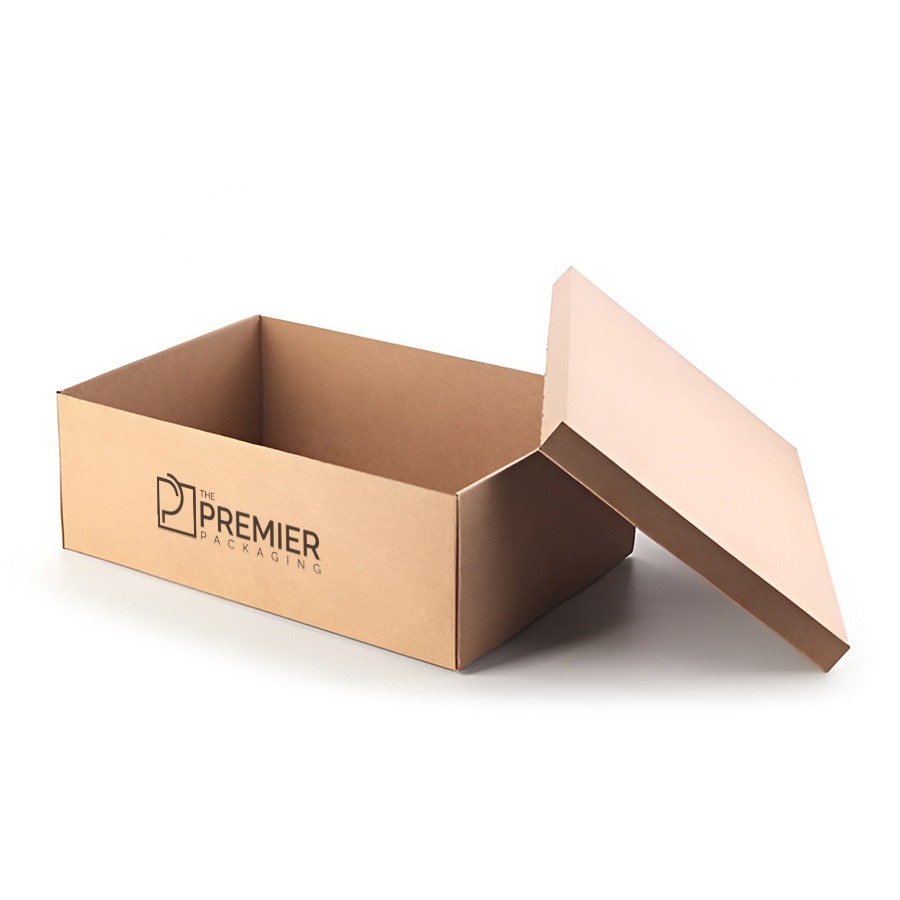
In a real-world scenario involving a retail product, imagine the product being processed in the same manner as it is now being processed. The traditional brown cardboard shoe boxes, has been the benchmark of packaging for the past decades for various items such as shoes, clothing, accessories and electronic kits. They are strong, easy to find and stack.
If your product doesn’t quite fit into that defined geometry, however, then it is very inefficient to use a fixed, default retail structure for your online ecommerce fulfillment. When an online footwear brand sends a nice pair of low-profile sandals or minimalist running shoes in those ubiquitous brown shoe boxes, the space between the top and bottom of the shoe box is often a huge empty space.
The brand can save only two inches off the height and one inch off the width by re-engineering that container into a custom, lower-profile box that snugly fits the unique shape of the shoe style. That’s a small amount in theory. Those three inches span 50,000 shipments; the savings amount to mid-six-figure dollars in carrier surcharges in a single fiscal year in the world of global logistics.
Strategic Path to Right-Sizing
To create a right-sized packaging strategy, you need a systematic review of your existing product offerings and fulfillment practices:
Instead of having to think of a new custom box size for each individual SKU, audit your catalog and categorize products into predictable dimensional profiles. Determine the common denominators.
Review your past checkout history: Design for the Multi-Item Order. When your customers are often purchasing two or three items at the same time, don’t make your custom boxes based on a single item. Design and make a well-made multi-item box that fits those items cleanly, without any wasted space.
Test Your Tolerances: Collaborate directly with structural packaging designers to see how small or tight a box could be while maintaining product safety. Use structural dividers or creative folding dividers for impact absorption instead of loose fill.
So, it’s a decision your business simply can’t afford to make to continue paying for unoccupied space. You can use your box dimensions to make your inventory fit into the physical constraints of your supply chain, and then you can start using your packaging as a cost-saving machine with a predictable and aggressive payback curve.
Author bio:
Hello, I am a professional SEO Expert & Write for us Technology and submit a guest posts on different platforms- we provide a good opportunity for content writers to submit guest posts on our website. We frequently highlight and tend to showcase guests.